
📣 Message from Us
Welcome back 👋. Each edition we cut through the noise and explain what’s driving crypto. Last edition we said the Binance hackers “can’t simply spend the money” they stole. We overstated it. Investigators can follow stolen crypto on the blockchain, but hackers can still launder it through mixers, bridges, and other blockchains faster than it can be frozen. About $2.85 billion, or 44% of the theft, has been frozen or seized, according to Elliptic, and the hackers control the rest. We have updated the web version of that story.
- Validator Digital
📈 This Week in Markets

Crypto fell across the board over the two weeks, and our lead story below covers why.
🎯 Rising Rates and Borrowed Bets Pull Crypto Down
What Happened
Bitcoin fell about 18% since our last edition to about $64,000, after touching a four-month low near $62,000 on November 15. And no single event set it off.
What We Know
Rising rates. The 10-year Treasury yield climbed to about 5.1% after consumer prices rose 0.4% in October, more than expected. When safe bonds pay more, money moves out of riskier investments like crypto.
Tech stocks falling. On November 5, the day after bitcoin's peak, the Nasdaq fell 5.5%, its worst day since April 2025, on worries that the midterm results will slow spending on AI, and bitcoin fell alongside the Nasdaq.
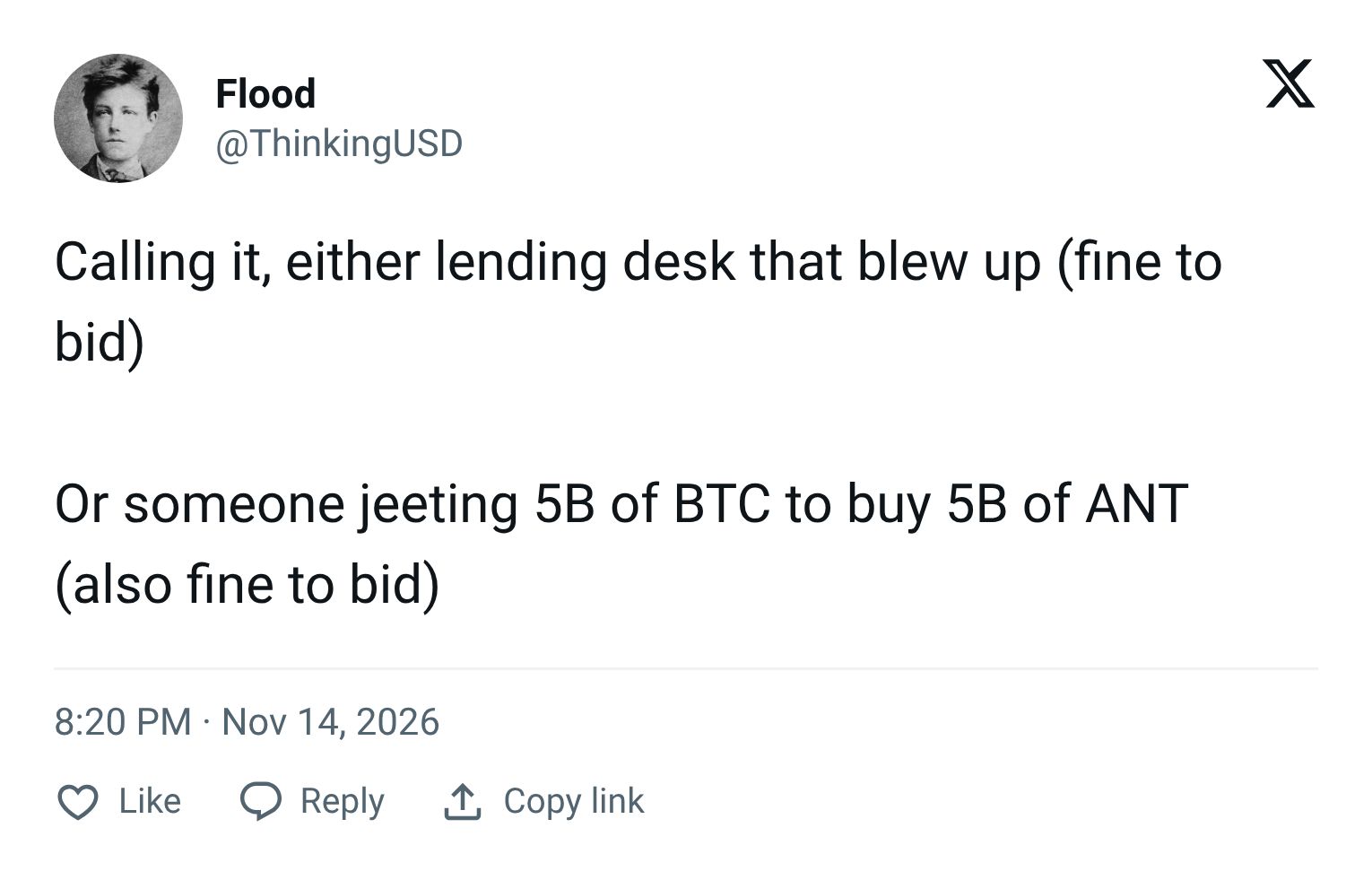
Borrowed bets unwinding. Much of the crypto selling came from futures traders using borrowed money. As prices fell, exchanges closed more than $1.3 billion of those bets in one day, according to CoinDesk, which pushed prices lower still.
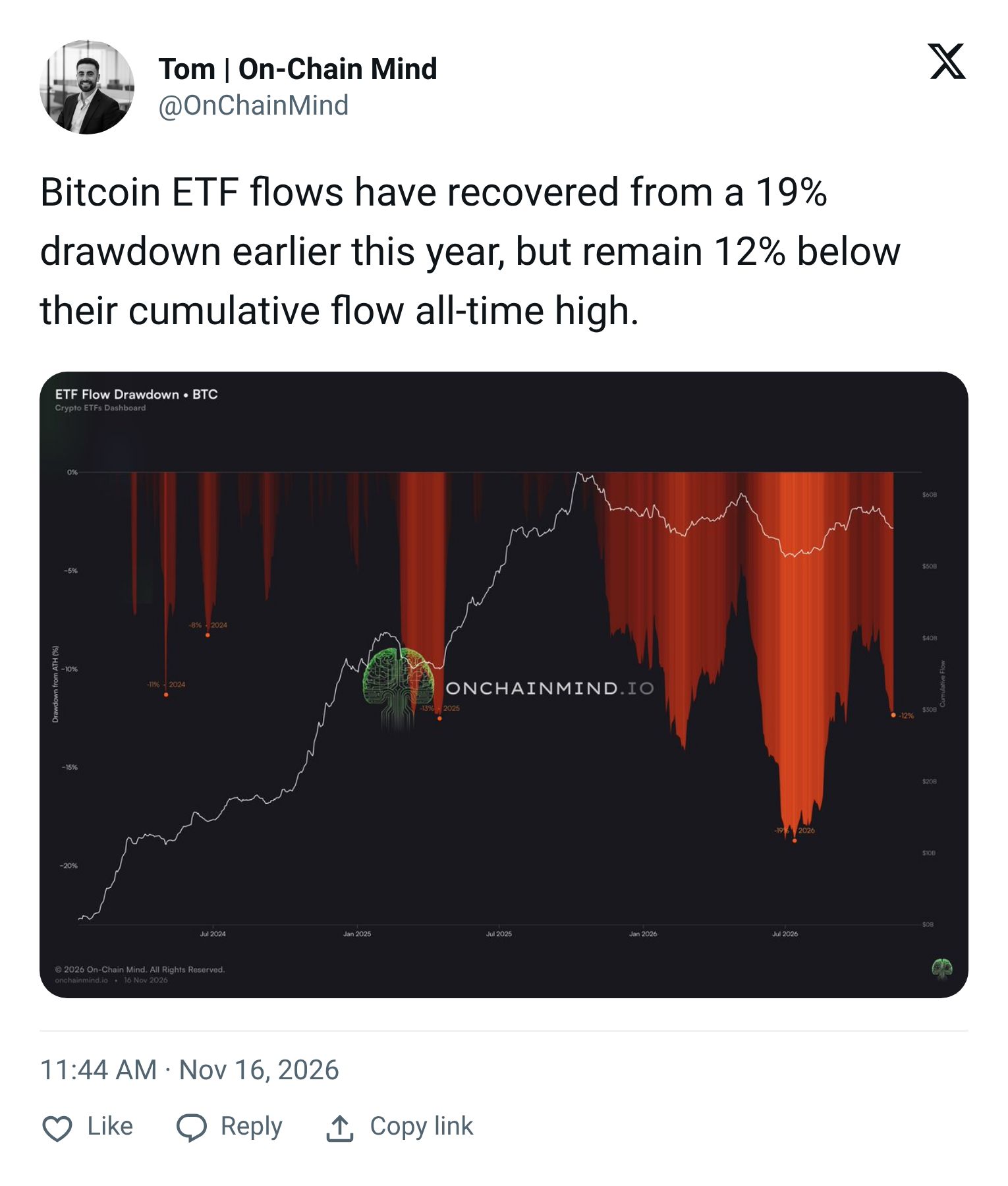
Cash leaving crypto. Investors pulled more than $1 billion from US bitcoin funds in each of the past two weeks. Additionally, the supply of stablecoins fell about $17 billion, or about 5%, over the past month, its steepest drop since 2022.
Other Possible Factors
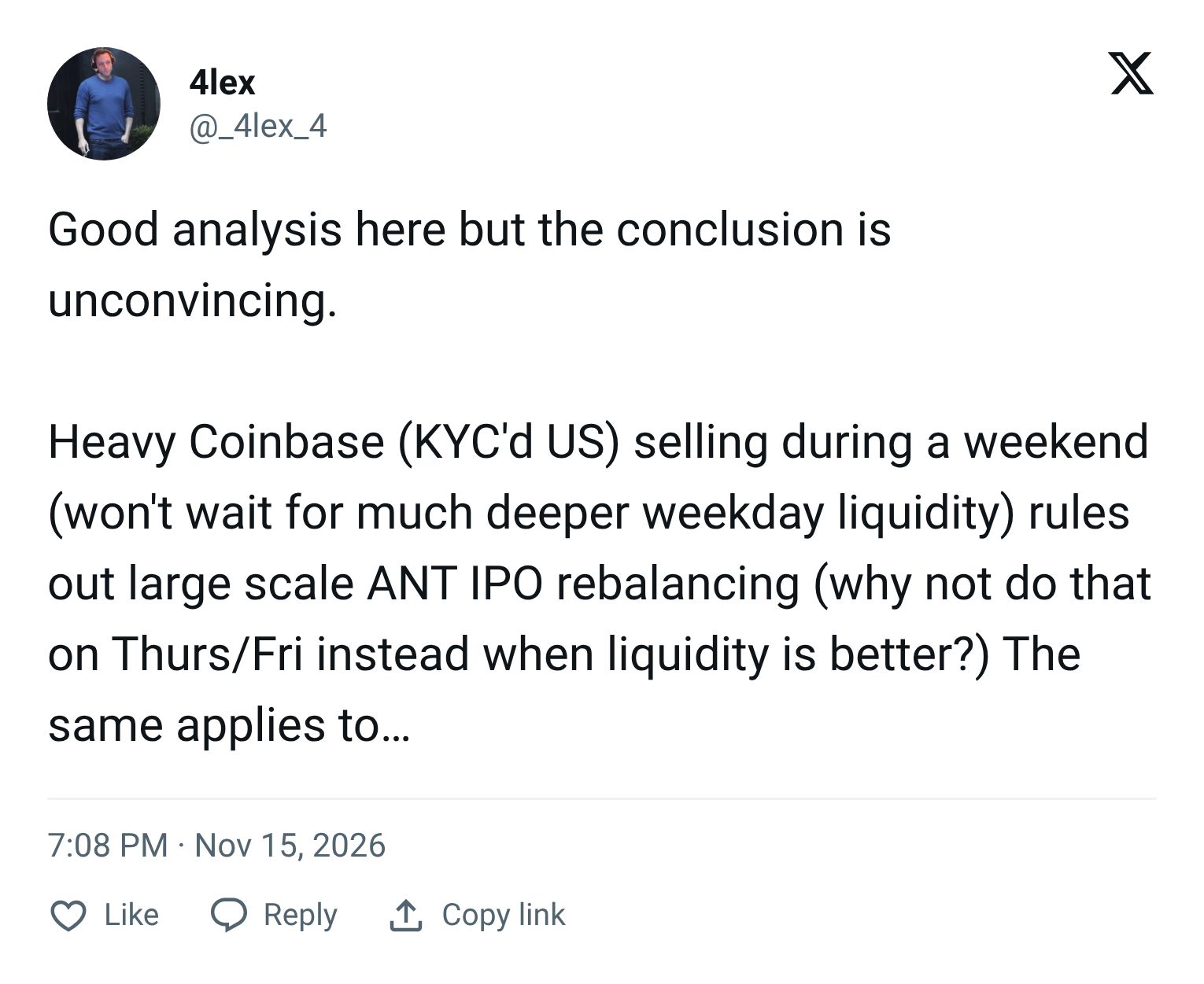
The Anthropic IPO. Anthropic sets the price of its $64 billion stock sale on November 18, and some investors may be selling crypto to buy in. When SpaceX went public in June, close to $6 billion in stablecoins was cashed out in the weeks before SpaceX shares began trading. This stablecoin drop began before Anthropic filed to go public, so the IPO might only explain part of the drop.
Trump Media's debt. Trump Media, the company behind Truth Social, borrowed about $1 billion last year to help buy bitcoin. Its lenders can ask for that money back starting on November 30, and the company told regulators it may sell bitcoin to repay the lenders. A sale of up to $1 billion of bitcoin would push prices down, so some traders sell early to get ahead of the potential move.
Iran tensions. The ongoing conflict with Iran keeps oil near $95 a barrel, which adds pressure on the economy and on riskier investments like crypto.
Why It Matters
From its low near $58k at the end of June, bitcoin climbed about 50% to roughly $87,000 by September 21, a rally many called the start of a new bull market. This drop has erased about 80% of that gain, and bitcoin now sits about 11% above the June low.
The Bottom Line
This is a broad retreat from risky investments that borrowed bets made sharper, and the first sign of a turn would be money flowing back into bitcoin funds and stablecoins, with the Fed's December 9 decision as the next big test.

🏆 What Else You Need to Know
NYSE Picks Avalanche to Settle Trades on Its Planned 24/7 Stock Market
Settling is the step where shares and cash actually change hands, and on the Avalanche blockchain, settlement can happen at any hour. The NYSE venue still needs regulatory approval before it can launch.
Morgan Stanley Puts US Stocks and Treasuries on a Blockchain
Morgan Stanley says it is among the first banks to use DTCC's new service, launched October 28, to turn stocks and Treasuries into blockchain tokens. Each token stands for a real share or bond held by DTCC, the firm that settles nearly every US stock trade, and gives its owner the same rights as owning the original.
Zelle Picks Solana for Its Stablecoin for Payments Abroad
Zelle, which moved more than $1.2 trillion in US payments in 2025, plans to run ZelleUSD, its own stablecoin, on the Solana blockchain for sending money to other countries. Zelle's first international route, to India, is expected by the end of 2026.
Visa's Stablecoin Payments Hit $20 Billion a Year as Western Union Joins
Visa says the stablecoin payments it handles behind the scenes now run at $20 billion a year, more than 15 times a year ago, and banks and companies on its network can now pay what they owe in USDPT, Western Union's digital dollar. Western Union, which moves money across more than 200 countries, launched USDPT in May to send money at any hour.
House Democrats Plan Their Own Crypto Rules
Rep. Maxine Waters is drafting a bill that would put the SEC in charge of most crypto oversight, according to industry sources. Democrats take control of Congress in January, and Waters is seeking to lead the House committee that writes crypto rules.

💬 Tweets of the Week
🧩 Blockchain 201: What Are Tokens vs. Coins?
Last edition we saw that a smart contract is a set of rules a blockchain follows on its own, and that smart contracts create most tokens. So what makes a token different from a coin?
A coin is built into a blockchain itself: bitcoin on Bitcoin, ETH on Ethereum, and SOL on Solana. A token is created on top of a blockchain by a smart contract, and anyone can make one. USDC is a token, and so are the tokenized stocks and funds we cover in nearly every edition.
Think of a blockchain as a toll road. The coin is the only money the toll booths accept, and tokens are the cargo. Every truck pays its toll in the coin, whatever it carries. On Ethereum, moving any token costs a small fee, called a gas fee, paid in ETH. The more cargo a road carries, the more its coin gets used.
Tokens can stand for almost anything. One kind is built to hold a steady value of one dollar, and those are stablecoins, where we go next week.
Next Week: What is a Stablecoin?
Last Week: What is a Smart Contract?
What story from this week are you watching most closely? Hit reply and let us know.
See you next week,
Don’t speculate, validate.
- Validator Digital
Disclaimer: Individuals have unique circumstances, goals, and risk tolerances, so you should consult a certified investment professional and/or do your own diligence before making investment decisions. The author is not an investment advisor and may hold positions in the assets covered. Certified professionals can provide individualized investment advice tailored to your unique situation. This newsletter is for general educational purposes only, is not individualized, and as such should not be construed as investment advice.